Hey everyone! This is your friendly neighborhood blogger just letting you know I'm still alive. I've been finishing up a few beta reads and art commissions this week, so my reviewing was a little slower than normal. I appreciate the patience though. I've got a number of new books in the dockets, and I'm eager to tell you my feedback (having fun with The Fourth Sage currently, and just bought W World Without Princes, so excited for that). There is one more thing that may make things a little slower...
NaNoWriMo!
In case you have never participated, NaNoWriMo is National Novel Writing Month. Basically, the goal is to write 50,000 words in one month. 1557 words a day, a little over four weeks. You can read some more about it here: http://nanowrimo.org/dashboard. While most people start a new book, I sometimes use this as my "get your crap together and write" month, and finish up projects already in the works. The sequel to my first book Archipelago is my current target, along with a steampunk novel on the side. I'd love to hear what everyone else is going to be plucking away at, and if you've got some encouragement or need some on this grand adventure, let me know!
NaNoWriMo usually gives everyone some pep talk to get you started, but my only advice is this: there is no secret recipe. Just write. Some people outline, some people gather pictures and blueprint out the book. Some people write biographies (I've done this). While all of that helps, there is no cure better than just putting words on paper. Write something good. Write something terrible. The point of this month is to break through the cobwebs, and convince yourself to write even when you may not have the perfect idea already mapped out. Some people make perfectly polished novels, but the real freedom I've found with this month is to let go of all that.
NaNoWriMo is about breaking the rules and abandoning thought to let your words be as raw and pure as you can let them be. It won't all be beautiful, but that doesn't mean the experience isn't super fun.

Showing posts with label General. Show all posts
Showing posts with label General. Show all posts
Saturday, November 1, 2014

Tuesday, September 9, 2014
New Job! Thanks for your patience!
Hi guys,
Just a note to let you know I am still alive. I have a handful of books I am ready to review in the next few days, I've just been a little delayed by work. I got a new job, and I'm working 9 and 10 hour days right now which has taken up a huge chunk of my reading time. I'm also finishing up a handful of beta reads. So thanks for hanging in there!
Because this weeks Top Ten Tuesday didn't interest me quite enough to participate in, here's a mini preview of some of the reviews I am cooking up next:


Just a note to let you know I am still alive. I have a handful of books I am ready to review in the next few days, I've just been a little delayed by work. I got a new job, and I'm working 9 and 10 hour days right now which has taken up a huge chunk of my reading time. I'm also finishing up a handful of beta reads. So thanks for hanging in there!
Because this weeks Top Ten Tuesday didn't interest me quite enough to participate in, here's a mini preview of some of the reviews I am cooking up next:
Thursday, July 24, 2014
Tidying the To-Read List
Hi everyone! Just a short note , if you're currently waiting for a review for me I apologize for the wait. It's been a bit chaotic transitioning to a new schedule now that college is over, and I'm doing my best to get to everyone within a timely manner. If you've been watching my review schedule you've probably seen the tiny train-wreck that took place. I've cleaned it up a bit, and there should hopefully be a more realistic outline for reviews now scheduled out. Some days I may get to more than one book, but I'm also doing some beta reading which eats up part of that wiggle room. I appreciate everyone's patience.
For the readers out there, thanks for your patience as well! I hope to have more reviews for you in the upcoming weeks, as well as some of the more fun blog posts like Stacking the Shelves or Top-Ten Tuesdays. Thanks for following my blog and I look forward to the upcoming month of reading!
For the readers out there, thanks for your patience as well! I hope to have more reviews for you in the upcoming weeks, as well as some of the more fun blog posts like Stacking the Shelves or Top-Ten Tuesdays. Thanks for following my blog and I look forward to the upcoming month of reading!
Tuesday, July 1, 2014
Negative Reviews Are Part of Business
"It's not personal..."
Negative reviews: they happen. It's just a fact of life. Every reader who likes some books is going to hate others, and that doesn't always mean a book is crappy or you hate the author. I know it's a cliche, but it's just business. It doesn't really make it easy though.
As a reviewer, sometimes I have to write tough reviews. For whatever reason, I don't like a book, or it just wasn't my cup of tea. As the star ratings go down, I admit, my guilt level goes up. Sometimes it gets even tougher if you know the author, or you later get to know them. You want to love it for their sake, but you also have to be honest.
Days like those make me want to hide under the covers and avoid my computer for a little bit. But in the end, the review goes up, and it's plastered for the world to see. It feels like a giant billboard screaming "I hate you!" to the author. Even with the most professional dictation, sometimes you are doomed to sound a little mean from time to time. But being mean is sometimes better than just being nice.
Let me explain.
The "Nice" Syndrome
Readers who review eventually have to come to terms with guilt, or they will catch the "nice" syndrome. The nice syndrome happens when ever book someone reads has a glowing review: "Great characters!", "I stayed up all night!", "Couldn't put it down!", "A+++!". After awhile, reviews like this feel cookie cutter, and they really do little to describe a book. As an author, you also learn to resent them a bit. Sure, it's great to have 5-stars, but stars by themselves have no sustenance. A star-rating is only as strong as the review that backs it. What makes it five-stars? What kept the pages turning? Was the prose brilliant, was the characterization flawless, did they do something new and creative?
In the same way, with time you learn low reviews don't always mean a book is bad. While there will always be flamers, books are bound to have people that just didn't like them, and that's okay! If someone loves steamy romance the chances of them loving fart jokes may go down a bit! People who like everything turn into robots, and that makes it difficult to relate to.
Be Honest, Not Cruel
All this being said, to be helpful negative reviews need to stay professional. Not going to lie, I've been on Goodreads skimming through their top reviews of all time, and some of them are soooo mean....but soooo funny. People will pick out one analogy and tear it to pieces, or rip a plot flaw to shreds. It's times like these when reviews can become personal, and that's a line to try to avoid crossing. Sometimes, yes, it's funny. But unless you're just reviewing for friends, it's probably better to resist.
We all slip up from time to time. But honest reviews are going to funnel all the volatile emotions you experience during a book into a clear and relatable road map for future readers. You have to make a choice: are you writing the review to make them laugh, or to actually help them identify whether this is a book they will like? If you're trying to be helpful, than be honest, not cruel.
A Few Final Tips
So, what do you do when you're about to write a negative review? How do you avoid being too nice or too mean? These are just a few of my personal practices. I'd love to hear if you have some of your own.
What to do if it's a Bad Review
1. Let it Rest
If a book makes me particularly irritated, I may give it a night to settle first before typing up my thoughts. This is particularly useful when you have a rage fit over a cliffhanger or an untimely character death. Give it a night, let yourself be mad. Return in the morning.
2. Narrow it Down
Funnel emotions into more concise feedback. What was it really that you didn't like. Did the plot never get resolved? Did you really hate one particular character? Try to isolate those emotions, remark on them, but also try to look objectively at the book beyond those things.
3. Be clear about any triggers.
This is important. Different readers have different triggers that can upset them. Was there dating violence? Was there crude humor? Identify (without spoilers if you can) anything that may have upset you more than the average reader.
4. Note pet peeves.
This is less serious than a trigger, but also important because the emotional response can be so high. For instance, I hate unexpected perspective changes in first person. Hate it. When I read 70% of a book and we suddenly switch characters, I can feel myself punting a star out the window. It's like I'm standing in front of the author, holding up that little star saying "that was uncalled for, now you're not getting this back!" With pet peeves, you actually have to sit back and have a little talk to yourself. "Self, is it really necessary to take their star for that one line of dialog? No? Then give it back."
5. Finish with a positive.
In drama class, there are critique sandwiches. You have your praise on the outside, and your critique on the inside. As you finish your review, focus on the good. Focus on things other readers may enjoy, even if you didn't. Try to identify another audience who may like it more.
If it wasn't your cup of tea, whose is it?
A Final Note
Reviews are not bookends. They aren't just a point a or point b destination. The best book in the world to me is going to be the worst book in the world to someone else, because they are based on very personal opinions. There are the mechanical issues, sure, (were there spelling errors, did this book have formatting problems) but reviews are more about planting street signs, so readers can guide themselves. Readers use reviews to navigate whether or not they may enjoy a book. So leave helpful comments, even if they're negative.
Thursday, May 22, 2014
Tools for the Organized (Or, want to be organized...)
It's not a secret that I am a pretty busy person; with art, writing, crafting and blogging I sometimes bite off more than I can chew. Anyone who knows me fairly well has often asked how I manage to do so much. Sometimes, I ask the same thing. If I wanted to sound impressive, this is probably where I would spew some advice about staying organized, and show you my tidy desk, immaculate room and de-cluttered living conditions. If I were honest, I would admit I fly by the seat of my pants more than I probably should.
 Tool 2: Astrid To-Do List


Organization has never really come easy for me. I try boxes, I try files, I have tried sticky-notes and scraps of paper to remind me when and what to do. In the age of technology, you'd think most of this would get more streamlined and easier, but I probably complicate things more than I should. I have tried more to-do list apps than I care to admit, and most of them seemed to just get in the way. I have an iphone, but I haven't even deleted my "School Work" schedule and I graduated a week ago.
The sad thing is, it hasn't been updated since December.
That all being said, there have been things that helped. If you're like me, some of these simple to use apps may be a game changer for you. Even if you don't keep every task, at least having them all laid out and ready to view can push you to get things done. In my world, seeing the mountain of tasks makes me more inclined to tackle it, and there are some fun ways to do this.
Tool 1: Habit RPG
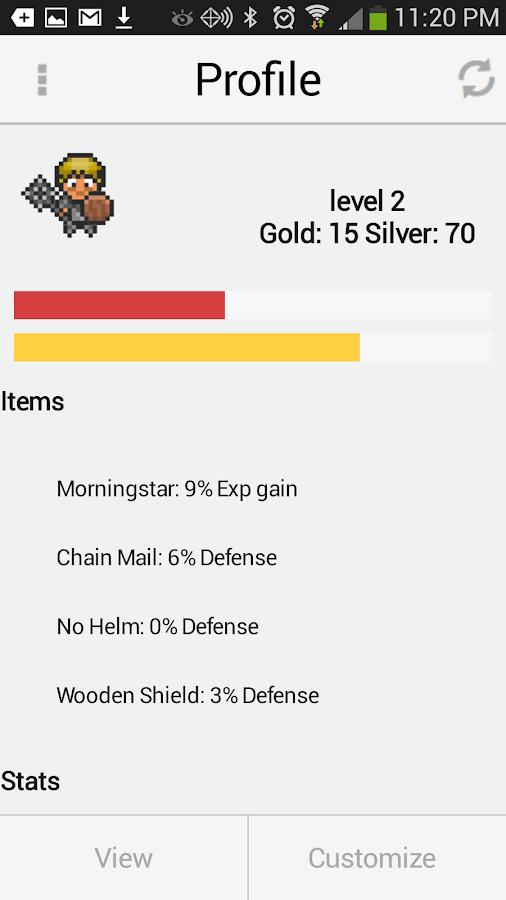
This was my first attempt to get my life together. This to-do list is built like a video game, complete with coins, rewards, and fun little characters. As you complete tasks, you level up, and unlock different features. It is certainly one of the funnest little to-do lists I've seen, and many of my friends are great at keeping up with it.
I tried Habit RPG as a beta user, and for awhile it worked. The problem was the "consequences" for not getting stuff done soon became a deterrent. I was dying every few weeks, and I realized many of my goals were probably too unrealistic to survive. The rewards were also hard for me to follow through with. I didn't always wait to "buy" myself that soda or hour of Netflix. If I wanted to do it, I would probably do it, so I ended up abandoning this one in the end. Yet I think the premise was really useful, and it was free. I like free.
Tool 2: Astrid To-Do List
So I used this app when I had my android phone. It was pretty good at bugging me to get things done and I felt pretty productive with it. The tasks were easy to organize, and it would remind me to work on stuff whenever I asked it to. Tasks were easy to add and delete, which is a big thing for me. I never want to spend a ton of time putting new things on a list or it becomes a deterrent.
When I was using Astrid, one of the drawbacks was all my tasks were stuck on my phone at that time. Now they have some interfaces to add tasks on your computer and stuff, so that may work better, but I eventually moved on to Google calendar for better organization in the end.
Tool 3: Goodreads
Okay, so this doesn't organize everything, but it is great for my reading list. I can easily see everything I need to read, and it has pictures which makes it much easier to find the book when I get down the list. Lists on Goodreads are easy to organize, so I can jump around in my reading list if I need to. I can also see how carried away I get on reading ambitions. It's easier to throw a few books on my calendar, it's another thing to see them stacked up as a wall of book covers.
Also, it has widgets for my blog. I like widgets.
Tool 4: Google Calendar
Sometimes, the fallback is the best thing. Google Calendar has been my organization platform for awhile now, but I like having everything in one place. I have 3 separate calendars, and I can update and organize them separately. The best thing is, two of these are ones I share. When I have shows I am scheduled for, I can add them to my business calendar, and it updates automatically via widget on my website. When I re-organize my blogging schedule, it shows here. When I go to the Google Calendar home page, however, I can view everything at the same time. My personal appointments and my work appointments are all in the same place, so it's easy to glance at things and work on them in a timely manner.
As much as I like Google Calendar, however, it was missing a little of the fun that made me like my other to-do lists. That's where Trello came in.
Tool 5: Trello
Trello is a free to use organization system that you can share as a business, or just as an independent user. What I like about it is the ability to sort and sift through various tasks so you don't feel "cluttered" by all the small things. You can add pictures, lists, and color organize your list. There is even a calendar view so you can look at tasks at a glance. I actually linked my Google Calendar with Trello via a website called Zapier, that automatically takes any new blogging events and puts them on my Trello to-do list.
I like Trello because it gives me a place to organize all the things that DON'T have a specific "due date". Sometimes, stuff needs to get done, and I don't want the pressure of putting a time limit on it. For business I often have minor to-do lists I just want to be able to look up when I'm on the go. "Oh, I need to make 100 keychains to restock inventory. I should add that to the list..." Trello lets me have the flexibility to do that, plus, it's got an app so I can migrate from phone to the web. It'll also bug me on my phone, which I appreciate.
Conclusions?
Overall, I don't think there is one program that really does everything for me. I like the current combination I have of Trello and Google Calendar with Zapier doing the updates in between. While it's not perfect (if I archive a task on Trello, it doesn't remove it from Google Calendar, for example), I think you learn to pick what works best for you. For me, the big thing is ease of access: I need to be able to pick up my phone and check to see what I have planned for a certain month or day if someone asks. But I also like adding tasks manually on my computer rather than my phone, because typing on an phone takes foreeeever. I didn't need all the bells and whistles of rewards points, just the satisfaction of a task completed, and a schedule kept. And most of all, I wanted the flexibility to change my schedule when life happens.
Because life happens, believe me.
What about you guys? What tools do you use to organized?
Wednesday, May 14, 2014
Summer Review Preparations
Hey everyone,
Mati here. This is sort of my "News Update" for the month. I am finally done with school, so I am getting to work finishing up my current review requests. I added a fancy little calendar at the bottom of my blog that should show all of the books I am planning on reading, with an optimistic time-frame attached to them. Authors, if you and I have talked and you do NOT see your book on the list, feel free to contact me and I'll get it sorted out.
Books on my to-read list may rearrange themselves a bit depending on a number of factors: mood, location, ease of access, whim, phases of the moon, etc. Sometimes I feel like reading something journalistic, and other times I need fluff, so if a book migrates across my list, don't take it too personally. This month a lot of my kindle books got attention since I could read them on my phone, but I'm hoping to at least get through all of the print books I have sitting here before too long.
Thanks for your patience, and if anyone is reading this, thanks for being a follower! Having a few readers every once and awhile keeps me from just talking to myself. ; )
Looking forward to a summer of books! Hope you are too!
- Mati
Friday, May 2, 2014
Random Q&A: Mati Raine
Because I don't have a review for you this week (I know, I'm lame. It's been a busy week!), I decided to do a random Q&A about my own experiences as a writer. If you have your own answers to one of these questions, I'd love to here your response as well!
What is the hardest part about being a writer?
Q&A: The Author's Life for Me?
Author: Mati Raine
Publisher: Fantastic Journeys Publishing
Books: Archipelago (YA Urban Fantasy)
Website: This blog! Also, www.archipelagobook.net
Publisher: Fantastic Journeys Publishing
Books: Archipelago (YA Urban Fantasy)
Website: This blog! Also, www.archipelagobook.net
What is the hardest part about being a writer?
I think the hardest part about being an author I've found so far is when people critique something in your book you know will get answered further down the road. It both frustrates and excites me. You sit on your hands a little bit to keep from bouncing out of the chair yelling "WAIT! I KNOW THIS ANSWER!" While you hope every reader will keep going, there will be a few that rage quit and never let you finish your story.
Being a writer means someone will eventually hate what you've written, no matter how well edited, polished, written or executed a book is. It isn't a profession where there is a right or wrong answer, rather, you're always waiting to find your audience, then dedicate what you're doing to those chosen few. Someday, somehow you will upset or disappoint someone. You just have to pick which person you will let down.
Do you ever get discouraged about writing?
I'll be honest, I do get discouraged sometimes. While I do appreciate all feedback, I would be lying if I said I haven't dreamed of 5-star reviews from time to time. It is a delicate balance between humility and being calloused enough to handle the demands of writing. If you don't take any feedback to heart, you'll never improve your stories. But if you don't learn to tune out the harmful stuff, you'll quickly give up because negativity is painful.
When you get a few negative reviews in a row, it gets discouraging. You wonder if you did something wrong, if you jumped in too soon, if you could have done something better. You just have to hold onto the reasons WHY you did certain things.
For instance, (spoiler alert) there is one love interest in my story people really like. Partway through, he turns into a jerk. I've had people really let down that I did this with one of their favorite characters, but I chose to do that BECAUSE he was so likable. Every romance story I read, there is a knight in shining armor, but it never reflected the real life experience I had that sometimes princes turn BACK into frogs. Love falls apart. People jump too fast, then realize something is wrong. I don't want readers to hate this guy, but feel and experience the blindsided hot/cold nature love can have in high school. One day you're dating, the next your dumped. There isn't always a perfect reason.
Writing is about maintaining your goals admits all the garbling input around you. Sometimes it's like protecting a sand castle in a windstorm. It gets frustrating when people don't see 'what you intended' But when they get it, that's the reward that keeps you going.
Is it hard to be a writer and a reviewer at the same time?
I know some reviewers that are very cautious about letting people know they write as well. There is a mentality at times that writers can't be readers, because they will suddenly be biased about what they're reviewing. Yes, authors can be biased, both in a positive and negative light. It is hard sometimes to give a negative review because I've been on the other side of one, and sometimes I want to give a higher review if I really like a particular author. But at the end of the day, I look at the story, and force myself to follow the review guidelines I already wrote for myself. Are there character flaws? Is the plot solid, etc, etc. Having my own checklist to follow helps keep me keep the focus on the story.
One hard thing about reviewing and writing at the same time is when people read your own writing. If you've critiqued something in one story, and someone finds a similar flaw in your own, it puts a slight blemish against you because 'you do the same thing'. It's like reading the work by an editor, and finding a grammar error. The problem is writers are often blind to our own writing. I'll be the first to admit that! I can spot quotation errors and punctuation issues in books, but my editor always has to move my punctuation marks inside my quotes all the time. This is because our brains often automatically correct those errors while we're working on things. This is why editors/beta readers/and reviewers are so meaningful, regardless of whether you are one of those individuals yourself. You need someone to look at your work who has enough distance from it to see clearly.
What is your favorite thing about writing?
My favorite thing about writing is actually just watching my characters grow. I know I'm the one 'controlling' them, but sometimes they still go off in directions I never intended. Characters are alive: I am a firm believer in that. If you write them well, they react, expand, and decided what to do all on their own. This is why I rarely outline: I want to let my characters respond to the environment, and I don't want to say 'this is where you're going'. Some of my favorite characters are the ones who don't give a crap what I want and ruin the story all on their own. Although 'ruin' usually means 'help' in the end.
What is one thing you wished you could tell people reading your work?
I always wish readers could see all the files I have hidden away I used to build my world. Heck, as a reader, I always wish I could see all of the authors OWN world building processes. I can put the url to my website at the end of my book, but there is never a guarantee they will go there and look at things. As a reader, sometimes we take for granted the building blocks a novel is built on. When I open a book and see appendices or maps, sometimes I think 'hey, that's useful'. But a quick glance at a map never seems to reflect the hours I know when into planning everything on it.
What are your writing goals for the upcoming year?
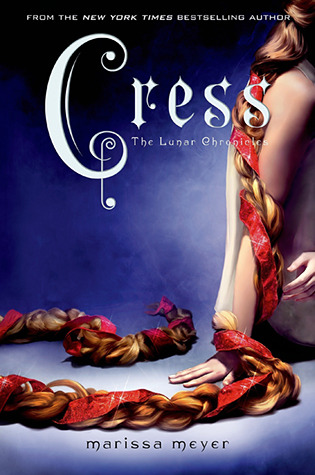
My writing goals for this year are to finish my next book, Confluence. With each review I get, I feel more motivated to get it into the market. It has one of my favorite characters in it, and I have been super excited to share her with people. But I also have a goal to get it written and edited well first. I've seen some rushed books this year, and I want to make sure I don't get caught in that hype. Some books can be written great in a short span of time (I think of the Lunar Chronicles by Marissa Meyer), but I think it's easy with the rise of the e-book industry to throw something out there before it's completely 'polished'. Writers may hate waiting for more than a year for a book, but I think being handed an unfinished book is much more disappointing.
AUTHORS!!! What about you? How would you answers these Q&A questions? Send in your answers (along with some basic author info/links), and I will try to feature one or two of you this week here on my site!
Friday, April 4, 2014
April is the Month of...Busy?
So I've seen a few other Bloggers doing their Month in Review features, but I thought I'd do something different. This is sort of a 'Monthly Preview' of things to look forward to with my blog this month!
 The good news is, I should have some fresh new background art here within a few weeks! I have been working on a new piece of art, and I'm hoping that will work well for the blog! It's always hard to tell if I'll like it or not until I finish something though. If I put it up and decide it really looks bad for some reason, I will at least post a link to it so you can see. In the meantime, here is a WIP to enjoy.


News
First of all, the sad news: I may be a little slower on reviews in the first few weeks here. Usually I can finish a book in a day or two, but I'm doing a few beta reads right now, so those will take up time, and the results won't be showing themselves here on the blog. If you're curious how those are going, you can see my little progress bars on the sidebar, but other than their disappearance and reappearance, it's sort of a behind-the-scenes adventure.
The good news is, I should have some fresh new background art here within a few weeks! I have been working on a new piece of art, and I'm hoping that will work well for the blog! It's always hard to tell if I'll like it or not until I finish something though. If I put it up and decide it really looks bad for some reason, I will at least post a link to it so you can see. In the meantime, here is a WIP to enjoy.
Book Haul/Upcoming Reviews
Last month, I had tons of review requests come in. I apologize to anyone who came in near the end of the scramble; I appreciate the patience everyone is showing. It is hard trying to pick and choose what to read, but as much as I'd love to take on every book, I just wouldn't have enough time. One week I had an average of three new requests every morning when I woke up, which made it hard to try and decide which ones to accept. I've been on the other side of those requests, hoping someone would read my work, so it always sucks to be the one saying no.
Beyond the books I pick up via review requests, I also have a few books in my bookshelves from other outlets as well: Oyster, the book subscription I use, Netgalley, and then general book shopping. As much as I adore the authors I get to review for, sometimes I just need to read something because it caught my eye all on its own. It's also nice to read books in the mainstream market, because then I don't feel quite as much pressure about my own review. It's nice to watch it drift into the masses.
Anyway, in no particular order, here are a few of the titles I have to read in the next few weeks. I tried to pick a few from the various outlets I collected them from:
General Author News
So, I'm doing a few shows this week; another reason for my busy-ness. I have a book signing, and I'm doing some comic cons, as well as an art show. Yay! Oh, and graduation is around the corner. I guess that's important.
My book giveaway is ending in 15 days, so don't forget to check that out! Otherwise, I will have new reviews and posts for you in the near future. If anyone is actually reading this, thanks for checking out my blog! I will try not to be too sporadic in the upcoming days.
Saturday, March 29, 2014
For the Writers: Successful Book Blurbs
When readers look for books, there are two major factors that help them to decide if they'll read further: the cover, and the blurb. Last week I took a more critical look at book covers, so this time, it's the book blurbs turn.
Back cover copy, book blurbs, and book descriptions all function the same way: they offer an enticing preview of a book, and invite the reader to continue reading. A good writer can't always write a good pitch, and it's sometimes painful and tedious to trim down an entire novel into a paragraph or two. Even several drafts down the road, a writer may find themselves tweaking and reworking to get it 'just right'.
But what sets apart a good description from a bad one? While many would just peg 'editing' as the culprit, I feel it is a bit more complex than that. Good blurbs are simple, but descriptive: they let us in on the major plot, players, and conflict. Bad blurbs are wordy, vague, or overly verbose. Before sitting down and tediously checking for spelling errors, I think it's just as important to ensure the substance is already there.
Ingredient Number One: The Players
As a reader, one of the first things I look for in the book blurb is who's the main character. When I pick up a book, I am investing in this person to be my companion. I want to make sure we can get along! Are they a know it all? Are they timid? Are they ready for this adventure or did they just get thrown into it? Knowing who a character is ahead of time tells me what to watch out for.
Bad descriptions don't let the reader know who their companions are. A reader has to turn the page and find out for themselves. Often this leaders to disappointment, and it can result in a negative attitude towards the book as a whole. Readers don't like to be mislead.
Ingredient Number Two: The Plot
Another simple aspect of the blurb is simply, what's happening? I want to know if this is a story I'd like to hear. Is this a quest? Is it a romance? Good descriptions serve as a road map so the reader orient themselves in a story. If you write your plot well, it can actually serve an additional purpose and guide your reader through elements like slow beginnings or side plots. If the reader knows what they're waiting for, it buys some wiggle room.
Ingredient Number Three: The Conflict
The conflict in a description can serve as the hook for your blurb. What is exciting? What would make someone want to read this? A murder? A kidnapping? A mystery? Sometimes, the main conflict is shown only in a brief, tantalizing taste. You can even use part of this in your tagline. However you manage, get the reader hooked.
Mixing it up: Be Concise
When writing your back cover, don't get carried away. Imagine an elevator pitch—they call it that for a reason. If you're traveling up an elevator, and you are 5 floors away from your destination, how would you quickly entice the person next to you about your story? Readers have a limited window of time, and if you don't catch them fast, you won't catch them at all.
I get at least three review requests from the time I go to bed, to the time I wake up in the morning. I sit down with my cup of tea and read through my e-mails, and the blurbs I hate are the ones that run on. If you can't summarize your plot in two paragraphs, you probably have a problem. Don't risk boring your reviewer before they can open your book. Know when to step away.
Getting Personal
I had a story I fought for months trying to describe. I couldn't fit it into a blurb, no matter how I worked it. By the end, I realized that I couldn't describe the plot because I didn't know what it was myself. It brought me back to a series of revision that cut out at least 40 pages of text that was honestly, unnecessary. It was difficult, but I realized I couldn't justify why it was there in the first place.
Your blurb is a challenge to yourself to defend your work, but you need to know the story well enough to summarize. Nothing should feel so important it hurts the story as a whole. That chunk of text may sound great now, but in the long run, is it doing more harm than good? You need to weigh each word you put into a blurb the same way you weigh each word you put into the novel.
I had the pleasure of sitting next to an author at a convention one year. They had written more books than years I'd been alive. We chatted and talked, and somehow my own work came up. He challenged me to describe it to him, and I won't lie: I flopped. My long-winded, mess of an explanation was painful, but there was a challenge underlying it. By trying to present myself to someone so experienced, I had to rethink. What was the story I was really trying to tell? And now, I pass on that challenge to you.
What is the story you're really trying to tell?
Focus on that, and everything else will gradually fall into place.
Tuesday, March 25, 2014
Book Covers: Time to Get Critical
Hey guys, so this is a post more for the authors in the audience, but readers, you're welcome to listen in as well. Today, we're going to look a bit more critically at book covers, and one or two problems I've seen popping up in the market.
So this is a topic I've avoided for awhile, because I'll admit, I'm a bit biased on the matter. As an artist, I can be a strong judge of book covers, and while I do read books with bad ones, it is always rare and they always fall below other books on my reading list. A book is your first impression with me as a reader, and content doesn't matter if you can't get someone to open your book. Authors are in risky territory because often what they are being judged on first is someone else's work: the cover art.
Believe it or not, a 'bad' book cover isn't always someone with a homemade picture or a terrible font choice. Covers can be ruined in many other ways, with the wrong image choices, image placing, and more. My point in writing this post is to help shed some light on what can make a bad cover, but also some of the ways these things can be avoided. If you hire an artist, be aware of what they're doing: ask questions, and be informed.
Below are a few of my book cover 'worst offenders'. Please note: all the examples used are cover examples only. I am going to be a bit critical here, but I am looking at covers alone. I have not read the books and this is not a rating of their contents.
Offender Number One: Copyright Copycats
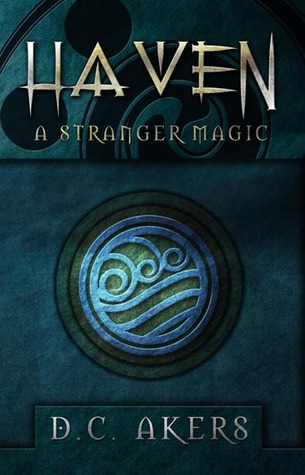
Believe it or not, even good looking covers can be troublesome. The following was a book I found on Amazon just this week. While it looks clean, easy to read, and interesting, there is a big problem with this book: the symbols. Recognize them? If you've ever watched Avatar: The Last Airbender you would. This is clearly, line for line, a water-bending symbol.



So this is a topic I've avoided for awhile, because I'll admit, I'm a bit biased on the matter. As an artist, I can be a strong judge of book covers, and while I do read books with bad ones, it is always rare and they always fall below other books on my reading list. A book is your first impression with me as a reader, and content doesn't matter if you can't get someone to open your book. Authors are in risky territory because often what they are being judged on first is someone else's work: the cover art.
Believe it or not, a 'bad' book cover isn't always someone with a homemade picture or a terrible font choice. Covers can be ruined in many other ways, with the wrong image choices, image placing, and more. My point in writing this post is to help shed some light on what can make a bad cover, but also some of the ways these things can be avoided. If you hire an artist, be aware of what they're doing: ask questions, and be informed.
Below are a few of my book cover 'worst offenders'. Please note: all the examples used are cover examples only. I am going to be a bit critical here, but I am looking at covers alone. I have not read the books and this is not a rating of their contents.
Offender Number One: Copyright Copycats
Believe it or not, even good looking covers can be troublesome. The following was a book I found on Amazon just this week. While it looks clean, easy to read, and interesting, there is a big problem with this book: the symbols. Recognize them? If you've ever watched Avatar: The Last Airbender you would. This is clearly, line for line, a water-bending symbol.
To give the benefit of the doubt, maybe this symbol was used before Avatar. Maybe they even got permission to use it. The problem here is the risk of copyright infringement. Avatar is a popular show, and people will recognize this image, so if the artist was being sneaky and didn't go through the right avenues, they could soon have some legal problems on their hands. Authors don't always know to watch out for copyright problems when they hire artists. Good cover,stamp of approval, right? Wrong. Always ask where your images come from. I cannot emphasize that enough.
I've seen pre-made covers where the characters used looked suspiciously like well known celebrities. This is also risky territory because celebrities themselves can be copyright protected. It's always dangerous to push boundaries like this. Maybe you get away with it, but it's always your gamble whether you want to face the consequences if you're wrong.
Offender Number Two: Stock Photo Syndrome
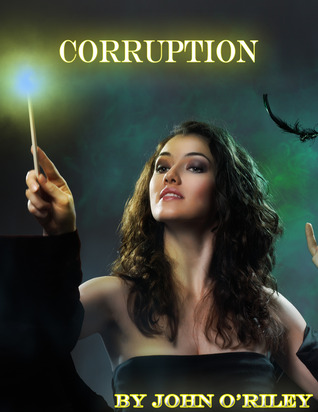
Purchased stock photos are very legal alternatives to handmade cover art if you want a clean looking cover. I will put a different caution on this one, however. Below are two covers of books I've seen on Goodreads in the past few months. Notice anything similar?
Try as you might, other people are going to use the same stock photo as you. When someone else owns that photo, it can get hundreds of other downloads, and your cover images has nothing proprietary about it. It's hard to market an image when you have to share it with other people. What can be a cheep shortcut can have a more expensive turn around.
The thing about covers is you want one that identifies your work. If someone sees your book in passing and thinks "Hey, that looks good", but doesn't have time to pick it up, you want them to be able to recognize it if they cross paths with it again. The last thing you want is for them to grab another book because they couldn't tell you two apart.
Offender Number Three: Photoshop [Un]Realism
Photoshopping is on the rise in the cover industry. It is another way to cut corners and save time. When done right, it can give you unique and professional looking covers. When done wrong, your book just looks silly. The following example was found in Hastings:
First impression of this book isn't so bad, but the feather is the part that is a little problematic. If you look at the flames, they are poorly warped and twisted, and the blur on the edges really distorts the image. I'm giving this some leeway because phoenix feathers probably don't 'burn' like normal feathers, so we won't get into the physics of that, but the shadow under the feather doesn't match the burning portion, and the flames and feather themselves are in different resolutions. I know that's a lot of jargon to swallow, but basically, the problem is the flames and feather don't 'fit' together naturally. I've also seen this with covers for werewolf stories or supernatural novels. Photoshopping a wolf over a face doesn't look cool if one of them is twice as pixelated as the other.
Other problems with photoshoped covers are where two images are mashed up and aren't in the same perspective. While not everyone can tell what they don't like about the image, most people will get a sense that something is 'wrong'. Covers that feel 'right' have more appeal even to the untrained eye.
Offender Number Four: Unreadable Fonts
So, this is the biggest offender I see in the self-publishing industry. Now, I love my indie authors, but throwing an orange font on a blue picture is not always the solution to help it stand out! Maybe it worked for Percy Jackson, but unless you're going to get expensive raised fonts, it's probably not going to have to same effect for you. Even Percy Jackson looks a bit flat in electronic format.
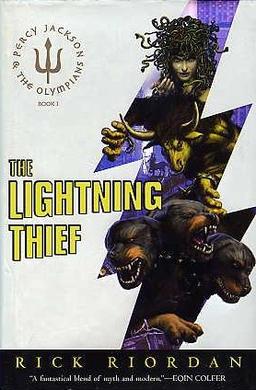
I know some people are trying to make covers on their own, but even with paint there are ways to avoid flat fonts. If you can, use Gimp or another cheep photo-editing program. There are plenty of tutorials out there that can show you how to use shadows and stroke settings. Even a 1pt border separates the font enough from the background you won't get colors visually bleeding together. DeviantArt and other websites have hundreds of tutorials to tech you basic techniques like this. It's easy to make excuses about time and money, but nine times out of ten, a reader won't pick up a book with a title they can't read.
Side Tip: Use a slightly larger, bold, darker font underneath. If you don't have photoshop, this is your walk-around to get a shadow under your font. Shadows help give your font something solid to rest against, so you don't have to pick ridiculous font colors to be able to see them against the background.
Offender Number Five: Grainy Images
This is another problem when cutting corners. If your source image isn't big enough, it doesn't print well. I've seen this happen in interiors and exteriors, and it really makes readers feel like the value of the book is lowered. Try to keep images 300 dpi or higher, and at least start in the size you are printing to. 3000 x 3000 pixel images should not be stretched from 1000 x 1000 pixel images.
Offender Number Six: Identity Crisis
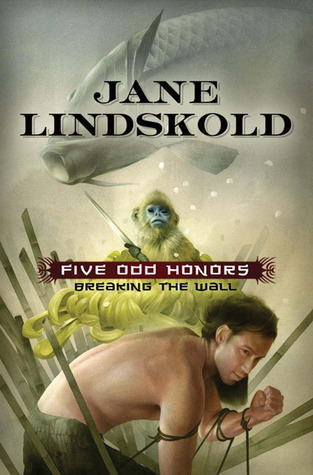
This is a problem readers are sometimes unaware of, but it is pretty common in the traditional publishing circuit. Sometimes a book is designed with no real attention to the story. In the case of Jane Lindskold's Five Odd Honors while her cover was beautiful, she admit she wasn't sure who was supposed to be pictured on the cover, since it didn't seem to look like any of her characters.
There are cases where authors honestly have little control over what cover ends up on the book shelves. I've seen covers where the image has the wrong hair color, eye color, or the image makes no sense for the story line. It's always odd to open up a book and have no idea what the image on the outside has to do with the interior. Mistaken identity covers like these are confusing to the reader, and also problematic if they are on your work. However nice a book is, it should always be an aid to the final product, not a hazard in the way.
Conclusion
Ignorance isn't bliss when it comes to book covers. 'Good enough' can be a disservice to your work. It sucks, but I will reiterate this one more time: the book industry is one of the few places where the first thing people judge you on is someone else's work. It's okay. Get a little critical. People do judge a book by it's cover.
Friday, March 21, 2014
Review Requests: Tips and Tricks
When you're a writer, reviews can be a life force to your success. Good feedback leaves you dancing and encouraged to move forward, but even critical feedback helps you look at your work differently and address any flaws you can't see on your own. It's easy to see why authors should seek reviews, but there are some positive and negative ways to go about it. Submitting review requests is just like any other professional interaction, and should be treated as such.
As a reviewer, sadly I don't have time to review every book that comes my way. So personal preference will always be a factor. I look for books that fit my tastes, and I know many other reviewers do the same. For authors, this provides the first major hurdle to getting reviews: knowing the reviewer. If you want a reviewer to take to the time to read your work, than it is important to set aside a few minutes to get to know them. Check their recent posts, their to-read list, their top-picks. Does your book fall into any of these groups? Are the books they're reading ones you would pick up? When looking for reviewers it's not enough to just have someone who will 'give it a shot'. The most honest and helpful feedback is going to come from someone who loves books like yours.
The second big step is going to be writing a good request. It is more than just having a fancy pitch, or a good description; you have to be professional as well. Never treat your reviewer like you are doing them a favor sending in your request. While the book is free, they are still committing time to look at your work. Reviewers are just like other readers, and we have to discern what we choose to read. Time is valuable when many reviewers have other jobs, hobbies, and responsibilities. Requests that show you haven't read their policies, or that don't take time to include required information quickly show that an author doesn't care.
The third big factor to a successful request is to take care with your description. How you write your request is as important as how you write your book. A long winded explanation can turn off a reviewer and they may not move forward. Don't rely on your content alone to save you: you need to reviewer to want to open your book first. Be concise, be informative, and be polite.
Wednesday, March 19, 2014
E-book Cost: How much is too much?
I have a confession to make: I'm somewhat of a budget shopper when it comes to books. Don't get me wrong, as an author I know just how important it is to have people support what you do. When I really love a book, I will buy the print copy, and set it up on my bookshelf like a glamorous trophy once I'm done reading it. But when it comes to e-books, cost can be a serious factor when I go to pick one up. Anything over $3.99 just feels way over budget, especially if the author is one I've never read before.
Maybe it's because the print price is listed on the same page, and the gap just feels too small to justify. As guilty as I start feeling, I start thinking through the used bookstores that might offer it for cheaper. $9 may not seem too crazy to some readers, but my heart starts beating a little faster when I realize the impact even 10 of those books would have on my bank account. At least with a print copy I feel like I have something to show for it. I feel a greater sense of ownership with a print edition. I can highlight if I wanted, I can get it signed, I can save it as a collectible. Those little data codes in my e-reader? My computer? I always feel like I'm just borrowing them. Why would I want to borrow a book for half the cost of owning it?
This dilemma has always plagued me, ever since the start of the e-book revolution. When the Hunger Games came out, I spent a full week debating buying the print of electronic edition to read. If I loved the book, I would have been sad I didn't buy the print edition, but if it wasn't my cup of tea, the money I saved on the e-book would make me feel happier.

There have been several studies about e-book price point verses sales volume. Smashwords published findings last year that showed the 'sweet points' for e-books were at $.99, and between $2.00 and $3.99. Many of the traditional print books I see fall in the $7.00 and up category, which is often double what many of these Indie authors are pricing at. As a consumer, I can see where some of the patterns kick into play. A $.99 cent book usually isn't one I expect to be 'great', a $7.00 book just feels full of itself. By staying in the middle ground, the pricing allows readers to take a risk without feeling like they are being cheated out of their money.
So what are your thoughts? How much is too much for an e-book?
Maybe it's because the print price is listed on the same page, and the gap just feels too small to justify. As guilty as I start feeling, I start thinking through the used bookstores that might offer it for cheaper. $9 may not seem too crazy to some readers, but my heart starts beating a little faster when I realize the impact even 10 of those books would have on my bank account. At least with a print copy I feel like I have something to show for it. I feel a greater sense of ownership with a print edition. I can highlight if I wanted, I can get it signed, I can save it as a collectible. Those little data codes in my e-reader? My computer? I always feel like I'm just borrowing them. Why would I want to borrow a book for half the cost of owning it?
This dilemma has always plagued me, ever since the start of the e-book revolution. When the Hunger Games came out, I spent a full week debating buying the print of electronic edition to read. If I loved the book, I would have been sad I didn't buy the print edition, but if it wasn't my cup of tea, the money I saved on the e-book would make me feel happier.
So what are your thoughts? How much is too much for an e-book?
Sunday, March 16, 2014
Reading by Subscription


Now in college, it's become impractical to bring home stacks of books. As glamorous as those book piles look on my dresser, I need room to work and do homework; you know, 'adult stuff'. Ebooks became my friends more out of necessity than desire, and thus, the glimmering world of hope that opened up when subscription based reading services arrived.
Oyster vs. Scribd
When you look into book subscription services, there are two clear front runners in this category: Scribd, and Oyster. The catalogs are similar in size (about 100,000 books), and the price is close as well ($8.99, $9.95). The key differences I encountered are the readers they are compatible with. Oyster only runs on devices with Apple iOS 7; this includes most of the iPhones and iPads currently on the market. Scribd, on the other hand, has it's own online reader, and is compatible with both Apple and Android devices. Because I have an iPhone, this didn't limit my choice, but I can see where it would be problematic for readers who don't have an Apple device.
Between the two services, I found Oyster had the better selection, however. Many of the books were new releases, and the YA/Teen category had a large variety to choose from. I easily added 10 books to my shelf just skimming through the covers and finding books I recognized and had wanted to read. Scribd didn't have the same appeal to me. Most of the books were older, and I picked them up because I wanted to RE-read them. Almost every Warriors book was in that service, but I wasn't sure I wanted to pay $9 a month just to re-read one series. Scribd felt like a library, which was good, but Oyster felt like having the free run of a book store, which was much more exciting.
Once I had a book I was interested in, the next phase was to sit and read. Scribd was set up much like any ereader. It was familiar, easy to use, but I wasn't dazzled by it. The book I picked up had some awkward formatting problems, which was annoyed, but not unheard of. Even after zooming in full sized there was one page I still couldn't read, and eventually just moved on. Oyster, on the other hand, has a beautiful design. The pages are clean, consistent, and I have yet to find a book in their catalog that doesn't meet those standards. The viewing options are fun as well. I prefer reading in Herald, but there are four other templates readers can choose from that change font and color options. Oyster is more about the mobile device than about the actual online experience. While you can add books and search for them on the computer, many of the functions are more streamlined and easy to use on the actual device.
For payment options, I like that you can use Paypal through Scribd, and it would be nice if Oyster added this option as well. Both have free trials for a month, and cancellation seems easy enough. Oyster was a little tricky to navigate at first, but feels more streamlined once you get used to it. I wish Scribd had a category just for YA, however, because getting trapped in a collection of children's books is a big downer. Overall, I think it depends on what you're looking to read. Oyster helps me get new titles without forking out wads of cash every month, while Scribd would bring the library right to my device.
Since I can't have both, I'll probably stick with Oyster. It's clean, wonderfully designed, and I am enjoying the books it offers. I'm still finding books I'm eager to read, and new titles arrive every day. What else could a book addict possibly ask for?
Saturday, March 15, 2014
New Updates and Upcoming Reviews
Hi everyone! Not sure how many readers are out there right now, but this is just a post to let you know a few new things happening this week. I'm testing out some new options to follow my blog this week and hopefully get a bit more traffic. Just added my blog on Bloglovin, going to see how that goes.
I also added a 'Upcoming Reviews' gadget, and am sorting out all the books I have to read in the next few weeks. There will still be plenty of book reviews, but hopefully a few more posts on books in general to mix things up. Keep an eye out for those and thanks for reading!
I also added a 'Upcoming Reviews' gadget, and am sorting out all the books I have to read in the next few weeks. There will still be plenty of book reviews, but hopefully a few more posts on books in general to mix things up. Keep an eye out for those and thanks for reading!
Tuesday, March 11, 2014
Beyond the Book Pages

While I love books of all genres, styles and lengths, there is a certain form of book that can quickly rise to the top of my 'favorite' list. This book isn't a casual relationship: I don't put it down, walk away, and never look back. This is a book that makes me a fan, and oftentimes, this is a book that is more than what's on the pages. Whether it features an interactive website I can find bonus content on, a scavenger hunt, or later turns into a movie, my favorite books transform themselves, and take on their own life.
Some might say these books use transmedia storytelling to accomplish their goals. Basically, the story is told in more than one format. Video game, website, book, artwork; transmedia storytelling gets to me as a reader because it allows me to become part of things. Harry Potter did this with Pottermore, The Lunar Chronicles have begun to do this with their marketing campaign. Piece by piece, they build communities where readers can engage in the stories they've come to love.
With the rapid rise of the e-book industry, I feel storytelling looses some of this magic. Books come out so rapidly, stay in our computer screens, and struggle to break free of those confines. While I love Indie works, and I read my fair share of e-books, I think this is a challenge authors need to address. A book can't always just be a book. To thrive in today's market, it needs to be more.
Fans embrace whatever outlets are given to them. If I find a good book, I can review it, I can talk about it, but sometimes, that is the end of our relationship. To truly engage in a book, bring my friends, and share it together is the next step up. Not every book can capture this sort of magic, or bring itself to life. But those that do earn my respect. Art, online content, interaction: however you choose to break the dimensions of a story doesn't matter. Just let it live a little beyond the book pages.
Subscribe to:
Posts (Atom)