Showing posts with label Historical Fiction. Show all posts

Saturday, August 8, 2015

Salem's Fury by Aaron Galvin

Salem's Fury
Author:   Aaron Galvin
Publisher:    Aames & Abernathy
Release Date: April 13th, 2015
Source: Received from the author in exchange for an honest review.
Sarah Kelly fears a father’s sins are revisited upon the children.
Her sister believes different. Adopted by the Miamiak and raised in the wilderness, Rebecca shares no such concerns. For her, memories of their early life and of Hecate’s attack remain dim.
But history condemns those who neglect the past.
When a war party brings news of a neighboring tribe attacked for harboring white folk, they demand the Miamiak aid in avenging their fallen brothers. With rumors the culprits were held in sway to a fearless witch on the rampage, Rebecca must decide whether to guard those she holds dear or seek vengeance upon a forgotten shade of Salem.

There was a lot I enjoyed with the first book in the Vengeance Trilogy,  but that feels overcast by how much I loved this wonderful follow up. Aaron Galvin takes us back into the world of the Salem Witch Trials, but this time, we see through the eyes of the Miamiak. 

Rebecca is a formidable spirit, with a wild nature that is easy to embrace and adore. While Sarah could sometimes be passive, Rebecca is anything but. I love when books have a strong female lead, but especially one that feels believable like this. Rebecca was skilled, but not unbeatable. She was brave, but not without fault. There is something very human and very complex about her personality that made her feel like a kindred soul.

I think Aaron did a good job of linking back to the first novel; it was done in a way readers who jump straight from book 1 to 2 don't get that "when we last left our heroes!" rush, but also left enough clues people who maybe took some space between the books (like me) could easily get back into it. While sometimes I dislike time jumps, this one felt satisfying. I liked seeing this startling growth in Rebecca, and liked seeing a new story taking place within an existing world. The old problems still exist, but it's someone else's turn to solve them. And not to knock Sarah, but I think Rebecca is much better equipped to handle it all. 

This book had plenty of twists and turns, and I won't lie, there were tears in my eyes at a few points. It had some of the dark spookiness from the previous books, but it felt very real. Personally, I like stories like this, where the dangers were things that honestly existed at the times. Yeah, there are terrible things happening here. But sometimes, life gets a little grim. 

Overall, this may be my favorite of Aaron Galvin's work. I just really relate to Rebecca, and like to think maybe there is a piece of her in me. That's the best sort of feeling you can come away from a story with, in my opinion. But how can you not like her? 

I guess my philosophy is something like this: some female characters are helpless, some are fighters, and some are phoenix; when you try to take down a phoenix, they just set the world ablaze. I'd put my bets on Rebecca. She's got her own spark, and I'm excited to see what it does next.


Monday, December 22, 2014

Hagridden by Samuel Snoek-Brown

Hagridden
Author:  Samuel Snoek-Brown
Publisher:  Columbus Press
Pages: 252
Release Date: August 19th, 2014
Source: Received from the author in exchange for an honest review.

As the Civil War winds violently down, fears of the South's uncertain future fuse with its unraveling traditions. Against the backdrop of this post-apocalyptic landscape, so littered with corpses and mythology and desperation, two women, stranded and alone in the Louisiana bayou, fight to survive.


To be honest with you, I had a lot of trouble getting through this book. While the writer does have some talent and there is some good writing in the bones of this novel, there were just some stylistic things that bugged me at a point it made it difficult to even read. Between the confusing opening, to the odd writing style, I admit, I just couldn't get over some of my first impressions. 

The one thing that I severely disliked was the lack of quotation marks in Hagridden. Dialog was just throw in here and there and there was nothing to separate it from the rest of the text. I know, Samuel Snoek-Brown isn't the first author to use this technique, but it personally just distracting for me and interrupts the flow of a book. The speech itself did give a nice impression of the area and the people in the story, but I felt like I was often backtracking when I hit conversation to read it as intended. 

The other thing that gets annoying is the two women in this story never get names. Everyone around them is given an identity, but the main characters remain faceless. Again, this is a stylistic thing, but it made it hard for me to relate to them. When you start the story with so much distance, it makes it hard to immerse yourself.

The story itself was interesting. The pacing to start was awkward (I don't even know how to explain it, but it was just difficult to read. The perspectives felt off, and it sort of had that 'shaky camera angle' type feel to it), but after the first chapter it was easier to read. The story had a strong sense of place, and you could feel like you were in the correct point in history, which is always a plus with historical novels. Characters felt dynamic, and there was a good mix of events happening (romance, drama, suspense). It's a bit hard for me to talk about the story since the main characters don't have names, but the relationship dynamics were unique to see. I liked the mother-in-law/daughter-in-law relationship because it's a bit unusual. I also liked seeing their struggles with the husband of the girl out of the picture. 

Overall, the bones were really nice. Just some overlying problems that really kept me from getting into things. Other readers may really like this, but it wasn't the book for me in the end. 


Wednesday, July 23, 2014

Salem's Vengeance by Aaron Galvin

Salem's Vengeance
Author:  Aaron Galvin
Publisher:  Self-Published
Pages: 264
Release Date: June 30th, 2014
Source: Received from the author in exchange for
an honest review

Sixteen-year-old Sarah Kelly never expected to meet the Devil’s daughter. She only sought innocent dancing in the moonlight, not a coven entranced by their dark priestess. When her friends partake of a powder meant to conjure spirits - and the results go horribly awry - Sarah is forced to make a choice. To keep their secret risks her own damnation, but to condemn them may invoke the accusing remnants of Salem to rise again.

Sometimes facts are spookier than fiction, and the Salem Witch Trials were certainly one of those cases. 

Aaron Galvin has managed to breathe new life into this time era, and <i>Salem's Vengeance</i> is a dark but eye opening look into a frightful time in history. What started as nothing more than childish impulses grows into a terrifying bloodbath, where fear becomes the true enemy of those involved. This book brings facts to the witch hunts, and the greedy men who helped create them, showing a well researched and engaging novel that is entertaining and enlightening.

To be honest, I can be a pansy when it comes to gore and violence, and there were quite a few moments in this book that involved it. Yet I still found the writing tasteful, and not overdone. The journal entries Sarah would read about the Salem Witch Trials felt a bit long at some points, but they were spaced out enough I didn't feel too dragged down by the passages. I liked the authenticity the story has, with family relationships, Sarah's friends, and even the little touches or romance. While I'm not a huge history buff, what I've learned about the Trials did match up with the writing in this book.

There are some intense scenes (this does deal with the Witch Trials, after all), but I feel most readers would be able to handle it. It has sort of those spooky movie shivers; if you're squeamish, just build your pillow fort before you start. 

Overall, another great novel by Aaron Galvin.


Sunday, July 13, 2014

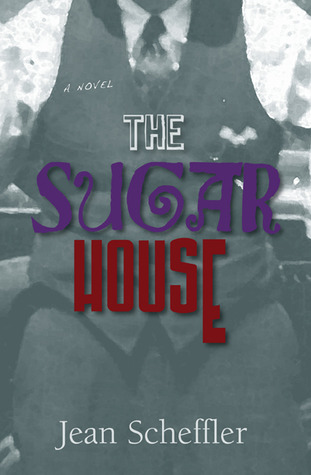
The Sugar House by Jean Scheffler

The Sugar House
Author:  Jean Scheffler
Publisher:  Self-Published
Pages: 400
Release Date: February 12th, 2014
Source: Received from the author in exchange for
an honest review

A gripping historical fiction that will transport you back in time to the Detroit of the 1920's- a world of Speakeasies, Gangsters, Auto Barons, Flappers, Lawlessness and Innovation.
Joe, a young boy growing up in Detroit, navigates between his family's strong Polish traditions and the electric atmosphere of America's fastest growing city until a sudden illness and heart wrenching death force him to grow up much too soon. 
He finds work with an ambitious group of Jewish immigrants known as the Sugar House Gang. To support his family Joe runs liquor up the river with Cappie, the man who will become his mentor, friend and ultimately, family. 
Together they race through the "Prohibition Era of the Roaring Twenties" in fast boats and faster cars, trying to avoid the law and rival gangsters while striving to satisfy the murderous leaders of what is to become the infamous Purple Gang.

The Sugar House was a book that clearly had the best intentions: it was well researched, fact-based, and has the promise of being a good historical fiction. The characters were like-able, the plot was interesting, but that wasn't quite enough for me. What could have been a lively trip back into the 1920's fell short in a few key areas in a way that made it difficult for me to really love it. I just felt this may have been a book that was in the "too soon" category for me.

One of the biggest problems with Sugar House was the tendency to info-dump. There were clear "history lessons" that just made the flow of the book slow down tremendously. Great historical fiction, in my eyes, takes you back into the past and lets you experience it without being too obvious about what's happening. This story was very clear when it was teaching. Every polish word was followed by a translation, unfamiliar events and holidays were clearly explained in text, and I didn't feel it was entirely necessary. When Joe goes up to his dad and calls him "Ojciec", I don't need to know right away that means dad. I like when the author lets me learn a little on my own. 

There were also some areas I felt this book just needed a beta reader, or some context editing. One of my biggest pet peeves is when words are used too close together, and this book had lots of areas where that was happening. "They were cutting up onions, then they put the onions in the pot and the smell of onions filled the air." It just needed some careful revision to help make sure things like that didn't happen. The beginning was also really slow in comparison to the pace at the end. I think part of this was because so much information was crammed into the early chapters. The end of the book was the best, in my eyes, because it focused less on all the facts, and stayed more true to the actual story.

The dialog in this novel felt flat in a lot of places, and I think part of that came from all the information these characters were forced to say. There was a scene where the Doctor drives Joe through a rich neighborhood, and gives him a house by house run-down of who lives there. I'm not sure scenes like that are believable, at least to me as a reader. Some of these problems were really a shame because I felt I might have enjoyed it otherwise. I liked seeing characters develop and grow with time, and I felt there was a lot of heart in the story. The trials Joe and his family go through are realistic and show a lot about the time era, I just wish it was easier to immerse myself and enjoy those moments. 

In the end, while this book showed the promise of a good historical novel, for a casual reader it was just too heavy. 


Tuesday, March 25, 2014

A Lifetime to Die by P.S. Meronek

A Lifetime to Die
Author: P.S. Meronek
Release Date: August 1st, 2013
Source: Won in a Goodreads Giveaway


The darkest of secrets sometimes linger for a lifetime. When they are finally exposed they can be like the discovery of an ancient tomb, perhaps better left alone, although never ignored. Aristotle Mercury’s father knew too much, so he was silenced. With the help of his friends in the Russian mob, Aristotle’s Uncle Jacob is able to move in and take over as the new head of the now successful factory that his own brother created.

The year is 1968. As the Red Army’s tanks roll into Wenceslas Square in the very heart of Prague, a seventeen year old Aristotle learns the horrible truth about his father. Five years ago someone else was murdered in his place to make it appear as if he was accidentally crushed under a factory press. Since then his father has been alive and imprisoned in the notorious Prague Institute for the Criminally Insane.

In a daring rescue Aristotle retrieves his barely alive father from the bowels of the terrible prison. After a short time his father succumbs to the ravages of his imprisonment, but not before he divulges the location of the evidence which proves he owned the now thriving factory, and of Uncle Jake’s murderous duplicity in stealing it from them.

With the Russians taking over the country, and the mob closing in to eliminate the only living heir to a burgeoning fortune, Aristotle flees Czechoslovakia and makes his way to America, vowing to one day go back and even the score.

He settles in New York, in Greenwich Village. He’s honest and works hard to learn the new ways of a strange land. Soon he befriends his eccentric landlord, the elderly Mrs. Schroeder. Telly, as his new friends in America like to call him, ignites a withered spirit of adventure in the lady who still believes in the good in people. She owns some property, and Telly has a talent for building. They both learn Telly also has an eye for the deal. Together they first develop her land, and then other land in the exploding New York real estate market. Telly’s ambitions lead him from the posh boardrooms of New York to the lucrative shores of New Jersey, where he’s almost killed as he constructs the world’s largest casino.

Never too far from his mind, always there to haunt and motivate him, Telly dreams of the day he will finally return to his homeland and exact vengeance on his Uncle Jake. In a sweeping saga of familial betrayal spanning three decades of intertwining lives, Telly Mercury finally gets his chance for justice. But does righting of wrongs of a demon filled closet come with a price too high? Secrets are sometimes better left untold, in spite of their screams from across the years to be heard.

His own salvation hanging in the balance, Telly must somehow accept that forgiveness trumps retribution, and money truly can’t buy happiness. And just maybe, as it is with Uncle Jacob, forgiveness is the worst possible epithet for a life lived in the accompaniment of the unquenchable thirst of greed and murder.

Well. That's over. 

I liked this book in the beginning. I really did. In fact, almost the whole first segment had me turning pages and sucked into Aristotle's life. The writing was good, which is pretty much all that's kept my rating up where it is. While I may not have liked the story, I can't say the author doesn't have a decent handle on prose. 

The problem with this book was the plot which went from the pretty basic 'Uncle cheated us out of money' to ... the end. I don't know what happened. Honestly. I feel like I got tempted into reading with a piece of candy then hit over the head with a cinder block. I'm not usually one to be so harsh about a book, but I'm honestly in disbelief at this point. I just keep asking "What happened?!"

A Lifetime to Die would fit into the Drama category, in my opinion. It was faintly reminiscent of a story like The Great Gatsby, although it lacked any clear hook to tether the reader to everything that was going on. [Warning, I might start dropping spoilers here soon, so if you haven't read it and want to, maybe stop here.] When you start this story, you sort of map out the basic elements: Uncle stole factory, hidden documents, murder attempt, mob, escape from the country. Then we get to America, and things start taking a new turn. Telly starts working construction, trying to earn money. Gradually he has a friend who dares him to go bigger and shoot for new dreams. Telly rises through the ranks and starts to make something of himself. Meanwhile, as a reader you're just hanging in there, waiting. What happened to the Uncle? What happened to Prague? Reassurance comes that this will be down the road. Telly is saving, building relationships so he can take on said Uncle. Then he falls in love. Then there is a casino and someone tries to kill him. 

Life falls apart. Telly falls in love again, and I kept waiting for some sort of epiphany. Maybe he's working too hard, and should just settle down and enjoy life? Maybe he needs to head home and resolve things? But Aristotle just keeps reaching higher and higher, still following the ghosts of his past. Time starts slow, then gets faster the more we read. Five years go past. Then six. Then ten. We read through all the small details of his arrival in America then his cousin comes in and I have no idea who she is or why she is important. The biggest 'reveal' doesn't happen until the end of the book, and I honestly don't know what it had to do with the rest of the story. 

Are you confused? I feel confused. 

The problem with A Lifetime to Die was it tried to do too much. Just like the back cover, everything was crammed into this novel and started to gush out the seams. There were points where I thought it would get better, but somehow things just didn't click. Why was it necessary to have so many conversation about profits and legalities and building the empire? Why didn't we get to know the people in his life the way we did Mrs. Schroeder? Time jumps so unexpectedly, I never know if the next chapter is the next day, or five years. This book left me grasping for straws, holding pages that felt ripped out of order while other segments seemed missing entirely. 

I felt like there were messages woven into the book. They needed more polishing to make them clearer, however. This book, as I understood it, was about spending a lifetime rushing forward, chasing something, only to find you turn around, and the moment is over. Years become moments, gone. It's the curse of youth to never look back until it's too late. However prominent that message could have been, it was lost in the mess for me. There was nothing to carry the story from point A to point B, so I just ended up sitting somewhere between the two, wondering what happened.


Monday, February 24, 2014

Savage Girl by Jean Zimmerman


I received Savage Girl in a Goodreads Giveaway, and for the most part, it was a great read. I love stories that keep me guessing, although there were few clues that would have enabled me to sort out this mystery until the very end. It was a interesting twist, especially for a historical fiction. The events are fabricated, but the world is lush, full of details, and the prose is wonderful and well executed. While I am not an expert of the 1870's, the story was still easy to follow and the unfamiliar vocabulary wasn't distracting like it can be in some novels.

The one thing keeping me from a ten-star rating was the formatting in the 'present'. While Hugo is telling the story of Savage Girl to his lawyers, it is a page-turning, engaging work. But the actual action in the opening, transitions and ending are difficult to get through. I had a problem with the complete lack of quotation around conversations in these sections. Everything just ran together, it just made those passages difficult to read. The heavy use of asides in the opening is also annoying. I hope some of these problems get fixed in later drafts. Because this was an advanced copy, some leeway could be given to problems like this. 

The plot was interesting, although the ending left me wanting a bit. I like mystery novels that make me go back and look for clues, but I'm not sure there were any to be found in this book. There are a few slow sections in the middle, but there are plot elements that help carry you through those. 

Overall, I think this novel is promising and I appreciate Zimmerman's writing style. I look forward to seeing the final release and future works.